
7 min read / Sydney Epoxy Masters
What professional slab preparation involves
Professional slab preparation starts with checking concrete condition, old coatings, contamination, cracks and signs of moisture. The chosen coating needs a sound, clean surface with the profile required by its current product data sheet; grinding and repairs are specified to suit the actual slab.
Manufacturers of resin flooring are consistent on one point: the substrate must be sound, clean and suitably profiled before coating. This is what that means on a real Sydney slab.
 Illustrative image
1. Assessment
We look at the age and finish of the concrete, any existing coatings, cracks, joints, drainage falls and signs of moisture. We check whether the surface is weak or dusty and whether contamination such as oil has penetrated.
This decides the preparation method and whether any specialist products are needed.
2. Mechanical preparation
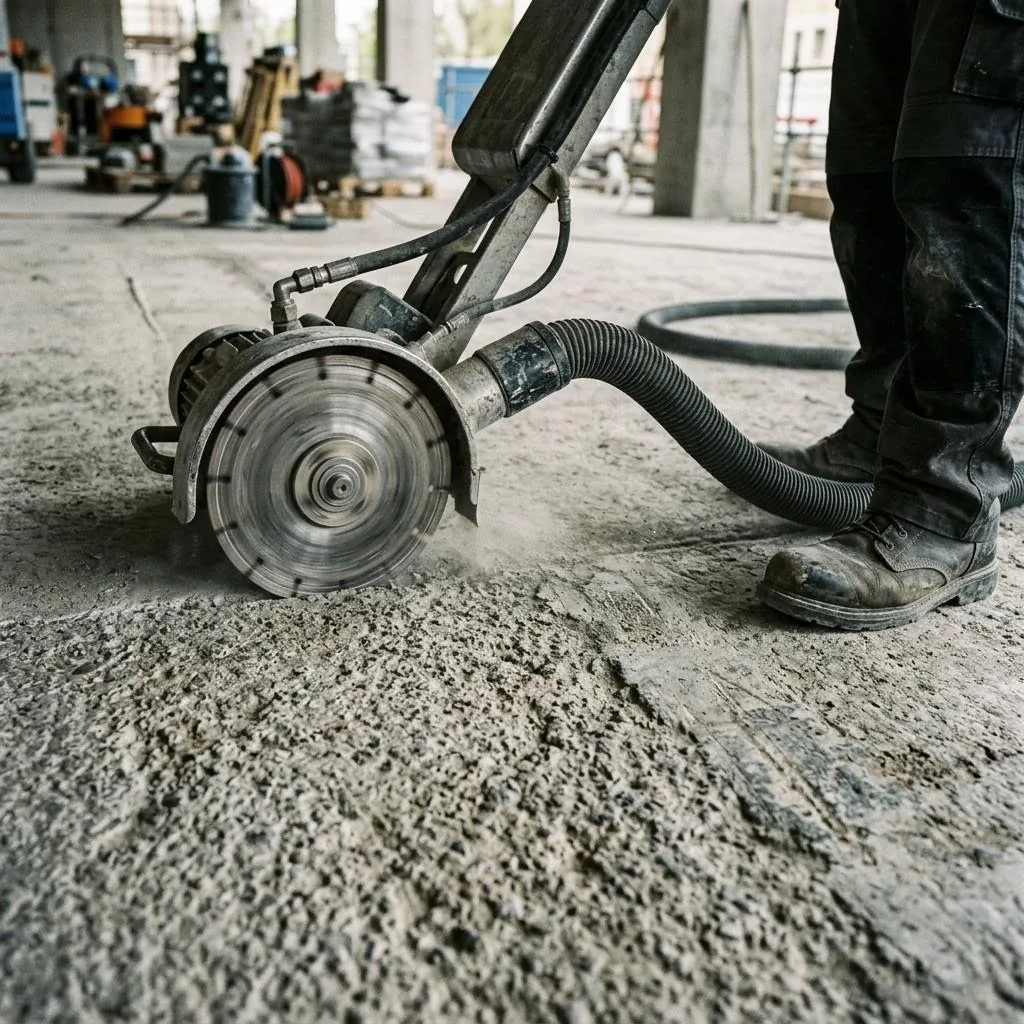
Manufacturer method statements typically call for mechanical preparation such as diamond grinding or shot blasting, rather than acid etching alone. The aim is to remove laitance (the weak top layer), old sealers and contaminants, and create a surface profile the primer can key into.
Sika guidance, for example, refers to profiles equivalent to ICRI CSP 3 for many coating systems, with rougher profiles for thicker systems. The exact requirement depends on the product data sheet for the system selected.
3. Dust extraction
Grinding produces fine concrete dust. We use connected dust extraction during grinding and vacuum thoroughly before priming, because dust left on the surface weakens the bond.
4. Repairs
Cracks, spalls, blow holes and damaged edges are opened up and filled with a compatible repair material. Guidance from manufacturers notes that blow holes and voids should be fully exposed during preparation so they can be filled rather than bridged.
- Hairline cracks may be filled and ground flush
- Moving joints are treated differently to static cracks
- Structural cracking needs separate advice
5. Moisture and conditions
Coatings are sensitive to moisture in the slab and to air and surface temperature during application. Manufacturers specify limits, including keeping the surface temperature above the dew point during curing. Where moisture is present, a moisture-tolerant primer or a different system may be appropriate.
What this means for you
Preparation is mostly invisible once the floor is finished, which is why it is easy to under-price. When comparing quotes, ask exactly how the slab will be prepared.
Can a failed coating simply be painted over?
Loose or incompatible material needs to be removed before recoating. A sound existing system might be suitable for an overcoat after compatibility and adhesion checks, but visible blistering or peeling needs its cause investigated first.